
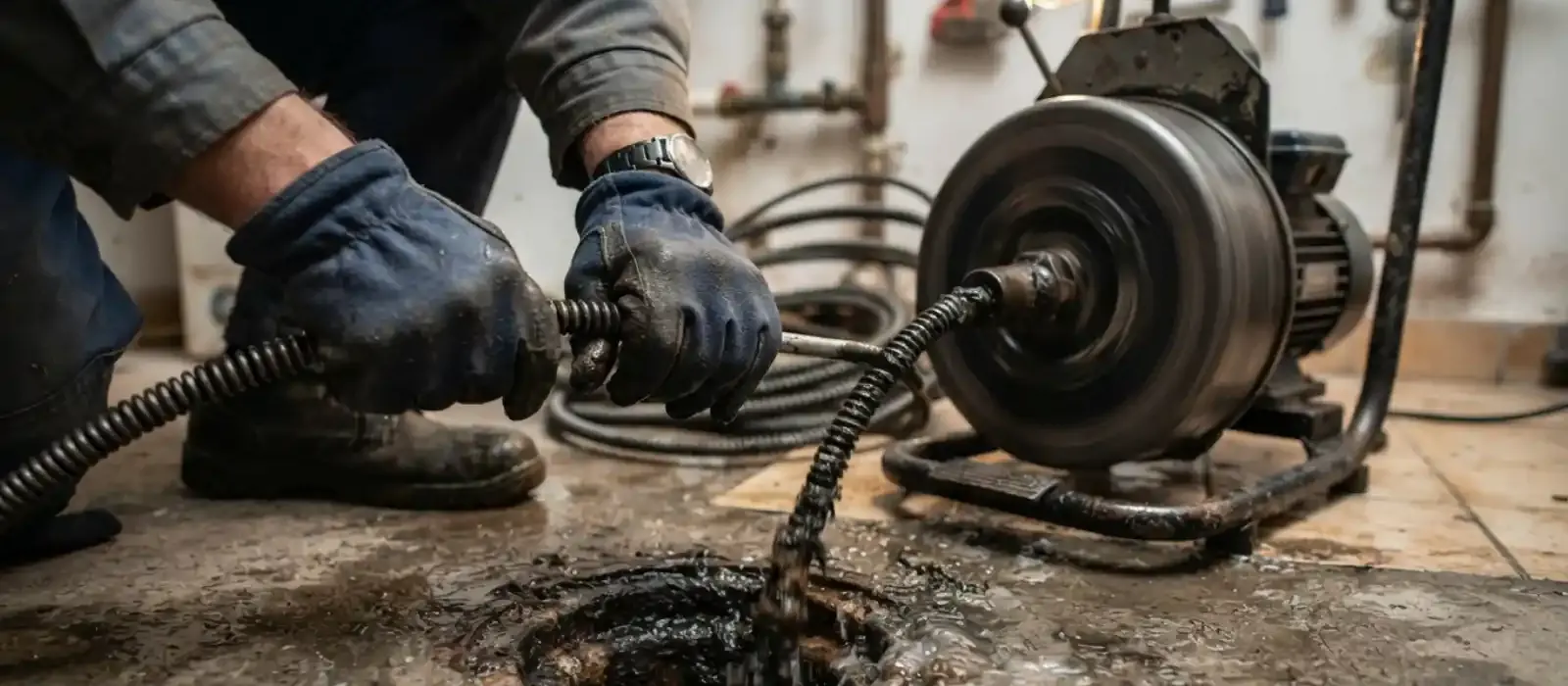
A clogged toilet vent pipe shows up as gurgling, a slow flush, a toilet that bubbles when other fixtures run and sometimes a sewer smell indoors. The vent lets air into the drain so water can flow. When it is blocked, the drain behaves as if it is partly clogged even though the pipe below is clear.
What a plumbing vent does
Every fixture drain connects to a vent that runs up through the walls and out the roof. The vent lets fresh air in behind the water as it leaves, so it does not create a vacuum. It also lets sewer gas escape outside instead of into the house.
When a vent is blocked, water leaving a fixture pulls air through the nearest trap instead. That makes a gurgling noise and can siphon the water out of the trap, which lets sewer gas into the room.
Symptoms to look for
| Symptom | Vent clog | Drain clog |
|---|---|---|
| Gurgling from the toilet or drains | Common | Sometimes |
| Slow flush with no visible blockage | Common | Common |
| Sewer smell indoors | Common, trap siphoned | Less common |
| Water backing up in the lowest drain | Less common | Common |
| Plunger helps briefly, then slow again | Common | Rare |
| Only after heavy use or in cold weather | Common | Less common |
If a plunger clears the toilet but it slows again within days, and nothing solid is in the bowl, suspect the vent. A drain clog tends to be steady, while a vent problem is intermittent.
What blocks a vent
- Leaves, nests and debris that fall into the open vent on the roof
- Ice and frost closing the opening in a hard freeze
- A bird nest or a dead animal
- A crushed or collapsed pipe in the wall
- A vent that was never installed correctly or was cut during a remodel
In New England winters, frost can close a small vent opening. Vent pipes that exit through the roof at a small diameter are at risk. Many codes call for larger pipe where the vent passes through the roof, to prevent frost closure.
Safe checks before you call
- Run water in the sink nearest the toilet and listen for gurgling.
- Flush another toilet and see if the first one bubbles.
- Pour a bucket of water into the toilet and watch how it drains.
- Check the outside vent on a safe day from the ground with binoculars. Do not climb on a roof in wet or icy conditions.
- Note whether the symptoms change in the weather.
A plumber can clear a vent with a cable from the roof, a hose or a camera. Do not climb on a roof to do it. Falls from roofs are far more dangerous than a clogged vent.
How to tell it from a main line clog
A main line clog affects every drain and shows up first in the lowest fixtures. A vent clog is more likely to affect a single bathroom or a group of fixtures on the same stack. If water rises in a basement floor drain when you flush, the issue is the main line, not the vent. See sewer line cleaning.
A toilet that will not flush well at all may have a trap or rim jet issue. The toilet repair page explains what a plumber checks. If one toilet gurgles and others are fine, the vent or a branch drain is the likely cause, and our drain cleaning team can run a camera.
Simple checks before you call
- Run water at the sink nearest the toilet and listen for gurgling.
- Flush the toilet and watch the water level in the bowl.
- Check whether other drains in the house gurgle at the same time.
- Look at the vent opening on the roof from the ground for snow, leaves or a nest.
- Note whether the problem changes in wind or after storms.
If you can reach the roof safely, a flashlight down the vent opening shows blockages near the top. Do not climb on a wet or icy roof, and do not lean over the edge. A plumber has the right equipment and fall protection.
What a plumber can do
A plumber can run a cable down the vent from the roof, flush it with a hose and use a camera to look for a break or a belly in the line. Because the vent is part of the system that moves air through your drains, a repair may involve a permit. Ask before work begins.
A bird nest or a pile of leaves is an easy fix once found. A crushed vent inside a wall is a bigger job, so a camera look first avoids opening walls in the wrong place.
Keep a note of the symptoms and when they happen. A slow drain that only acts up during heavy rain or wind points to the vent, while a drain that is slow every day points to the pipe below it. That detail helps the plumber decide where to look first.
Frequently asked questions
Yes. A blocked vent lets air be pulled through traps, which makes the gurgling noise.
Only from the ground or with a plumber's help. Climbing on a roof is dangerous.
Frost can close a small vent opening in a hard freeze, which is common in New England.
Sewer gas can contain hydrogen sulfide and methane. Ventilate the room and call a plumber if the smell persists.
Heavy snow and ice can cover or close roof vents, so a gurgling toilet after a storm is worth checking.