
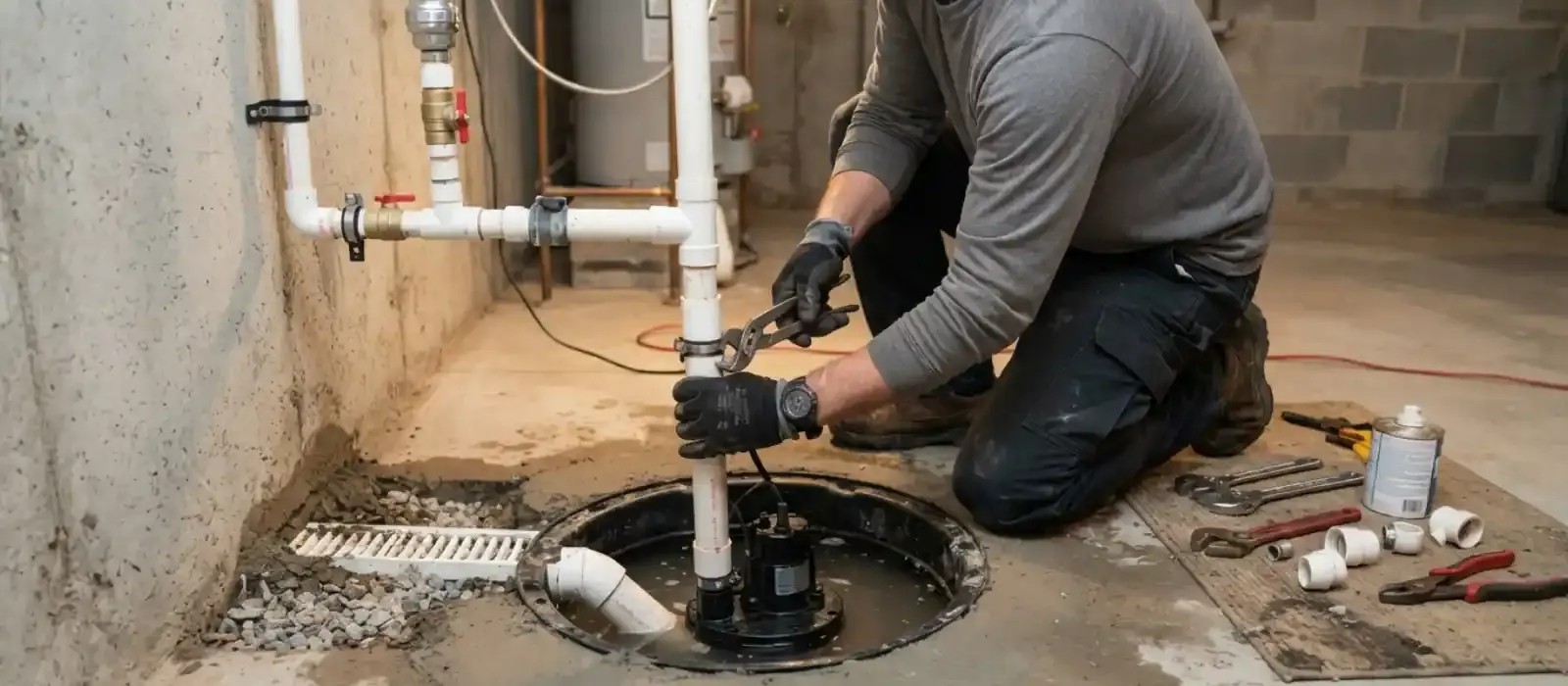
The cost of a sump pump installation depends on the pump, the pit, the discharge route and any backup system. A simple pump swap in an existing pit costs far less than a new pit cut into a concrete floor with a buried discharge line. A fair quote lists each of those separately.
Why you might need a sump pump
A sump pump sits in a pit at the lowest point of the basement. When groundwater rises, a float switch turns the pump on and it pushes water out through a discharge pipe. It keeps a basement from flooding when the water table rises after rain, snow melt or high tides.
If your basement stays dry in storms, you may not need one. If you see water at the cove joint between floor and wall, or you have a floor drain that backs up in storms, a pump is worth discussing. A plumber starts by checking that the water is groundwater and not a pipe leak.
What you are paying for
| Component | What it is | What changes it |
|---|---|---|
| Pump | Submersible or pedestal, by horsepower | Size, brand, cast iron or thermoplastic |
| Pit and basin | A lined hole in the floor | New pit or existing |
| Floor work | Cutting and patching concrete | Thickness, access |
| Discharge | Pipe from the pit to outdoors | Length, burial, frost protection |
| Check valve | Stops water draining back | Quality |
| Backup | Battery or water-powered pump | Capacity and brand |
| Alarm | Warns of high water | Optional |
| Permit and inspection | Town requirements | Local fees |
Ask for each line to be listed. A quote that gives a single number for everything makes it hard to compare. If one quote omits the check valve or the backup, it is not the same job.
Pump types and sizes
- Submersible pumps sit in the pit, run quietly and are more common
- Pedestal pumps have the motor above the pit, are easier to service and often louder
- A one-third horsepower pump suits many homes, and larger homes with high groundwater may need more
- Battery backups take over during power loss
- Water-powered backups use city water pressure and have no battery
Do not buy on horsepower alone. The pump's head, the height it can lift water, and the discharge length matter. A plumber sizes the pump to the pit, the discharge height and the volume of water you get in a storm.
The discharge matters more than people think
A pump that sends water ten feet from the house and onto a slope does its job. A pump that discharges beside the foundation sends the water straight back to the pit. The discharge should end at least several feet from the foundation, on ground that slopes away.
In a freeze, an exposed discharge pipe can ice over. A pipe with a vent or a bypass can keep working. Do not tie a sump discharge into the sewer line. It is prohibited in many places and can overwhelm the sewer.
Installing versus repairing
If you already have a pit and a pump that is failing, replacement is simpler and less expensive than a new installation. See sump pump repair for what we check. A basement that is wet for other reasons may need more than a pump, and our basement waterproofing page explains how to tell.
Quote checklist
- Does the quote list the pump model and horsepower?
- Is the pit new or existing?
- Does it include a check valve?
- Where does the discharge end?
- Is there a backup, and what kind?
- Is the permit included?
- What does the warranty cover?
Maintenance that protects the investment
A pump that sits idle for months can seize or stick. Test it every few months by pouring a bucket of water into the pit and watching it start, empty and shut off. Listen for grinding, and look for the float rising freely.
- Clean debris and silt out of the pit once a year
- Test the battery backup and replace the battery on the maker's schedule
- Check that the discharge pipe is clear and free of ice in winter
- Confirm the check valve clicks shut after each cycle
- Plug the pump into its own outlet, not a shared extension cord
A pump that runs constantly or cycles every few seconds is a warning. It may be stuck, undersized or fighting a check valve that failed. Call before the next storm, not during it.
Timing the installation
The best time to install a pump is before the wet season, when plumbers have open schedules and the pit is dry enough to work in. Waiting until a storm is forecast means competing with every other homeowner for the same few appointments. If you have had water in the basement before, do not wait for it to happen twice.
Frequently asked questions
It depends on the pump, the pit, the discharge and the backup. We give a price after seeing the basement.
If your basement floods when the power goes out, yes. Storms often cause both.
No. It is prohibited in many places and can overload the sewer. Discharge outdoors, away from the foundation.
Several feet at least, onto ground that slopes away from the foundation.
Much of Hull is in the flood zone, and basements and groundwater are exposed to storm surge.