
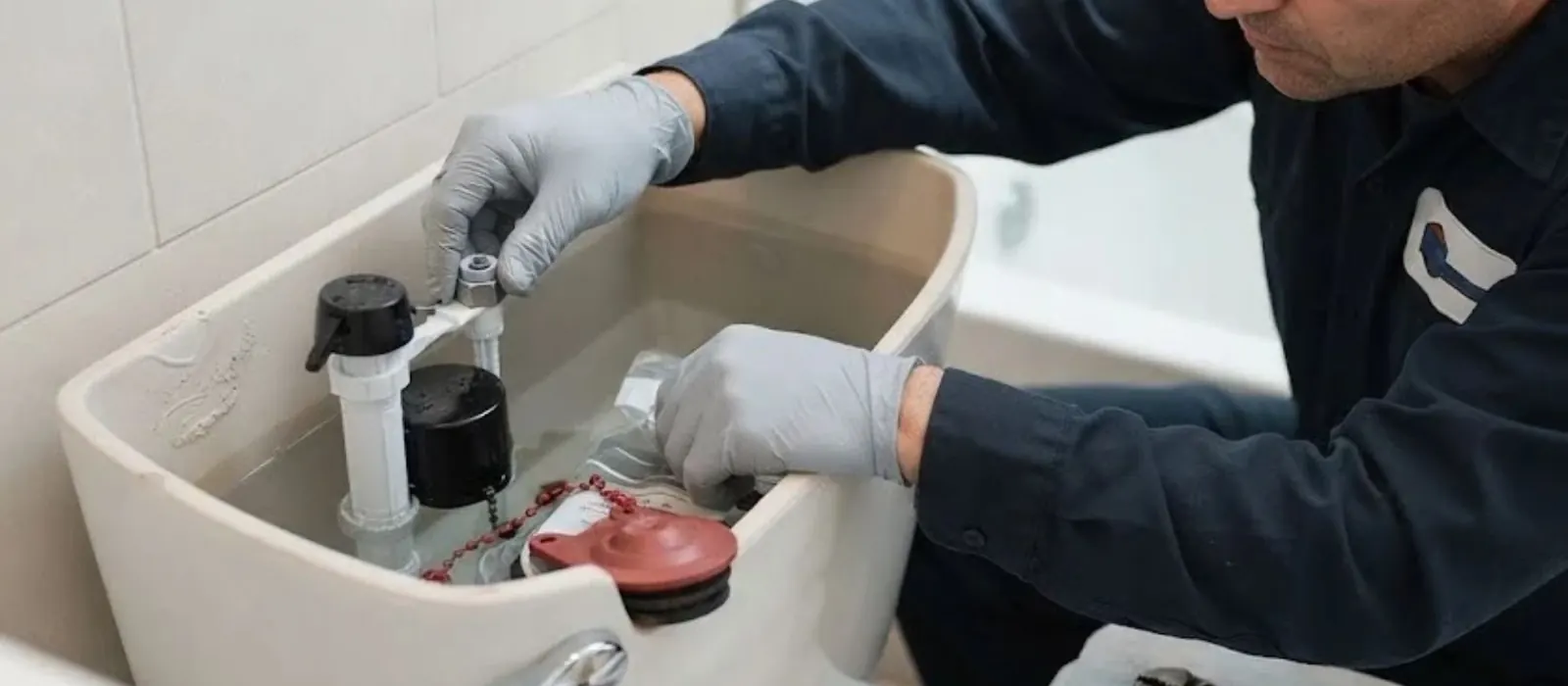
The most common toilet repair is replacing a worn flapper or a fill valve to stop a toilet that runs after flushing. The fix takes about fifteen minutes with a part that costs little, and it saves water. If the toilet still runs after that, the problem is elsewhere in the tank.
How a toilet works in thirty seconds
When you press the handle, a chain lifts a rubber flapper at the bottom of the tank. Water drops into the bowl and pushes waste into the drain. As the tank empties, a float drops and opens the fill valve, which refills the tank, and the flapper reseats to stop the flow.
A toilet that runs on has a leak in that cycle. Either the flapper does not seal, the fill valve does not shut off or the chain is too tight or too loose. Each is cheap to fix.
The five repairs, in order of how often they happen
| Repair | Symptom | Difficulty |
|---|---|---|
| Replace the flapper | Runs after flushing, hissing | Easy |
| Replace the fill valve | Tank keeps refilling, water noise | Easy to moderate |
| Adjust the chain | Weak flush or constant running | Easy |
| Replace the wax ring | Water around the base | Moderate |
| Replace the supply line or shutoff | Drip at the wall | Moderate |
Test before you buy parts
- Take off the tank lid and put a few drops of food coloring in the tank.
- Wait ten or fifteen minutes without flushing.
- If color appears in the bowl, the flapper leaks.
- If the water level is above the overflow tube, the fill valve is not shutting off.
- If neither, check the chain and the handle.
This simple test saves a lot of guesswork. It is the same test plumbers use on a call for a high water bill.
Replacing a flapper
- 1
Close the supply valve
Turn the valve behind the toilet clockwise and flush to empty the tank.
- 2
Remove the old flapper
Unhook the chain and lift the flapper off its pegs.
- 3
Fit the new flapper
Match the style and size, hook it on and attach the chain with a little slack.
- 4
Open and test
Open the valve, let the tank fill and flush a few times.
Flappers differ by brand and size, so bring the old one to the store. A flapper that does not match will leak even when it looks right.
Why this repair matters
A running toilet can waste hundreds of gallons a day. Because most homes pay for water by the gallon, that waste shows up on the bill, and in the sewer charge too. It is also one of the first things a plumber checks when someone calls about a high bill. If the problem is not the toilet, see leak detection.
When to call a plumber
- Water around the base of the toilet
- A rocking toilet
- A cracked bowl or tank
- A toilet that keeps clogging
- A shutoff valve that will not turn
A wobbling toilet or water at the base means the wax ring or flange has failed, and the toilet must be lifted. Our toilet repair page explains that work. For repeated clogs, see drain cleaning.
Parts that go bad and how long they last
Rubber flappers soften and warp with time, and chlorine tablets in the tank shorten their life. If your flapper feels slimy or has lost its shape, replace it before it fails. Fill valves wear out too, usually showing up as a hiss after the tank fills or a slow refill.
| Part | Symptom when worn | Typical fix |
|---|---|---|
| Flapper | Ghost flushing, running | Replace the flapper |
| Fill valve | Hissing, slow fill, overfill | Replace the fill valve |
| Flush handle and chain | Weak flush, handle sticks | Adjust or replace the handle |
| Tank bolts and gaskets | Leak between tank and bowl | Replace bolts and gasket |
| Wax ring | Water at the base, odor | Reset the toilet with a new ring |
Quick checks that save a service call
- Look at the chain for kinks or too much slack
- Make sure the water level sits about an inch below the overflow tube
- Check that the supply line is tight and the shutoff opens fully
- Wipe the flapper seat with a cloth to remove grit
- Listen at night, when a quiet house reveals a slow refill
If you have tried these and the toilet still runs, the problem may be a cracked overflow tube or a worn seat. That is a good time to call a plumber rather than buy another part.
Write the date of each repair on the inside of the tank lid with a marker. Next time something goes wrong, you can see at a glance how old the parts are and whether the same one has failed twice.
Also keep a spare flapper and a fill valve in the cabinet under the sink. These parts are small, they store well and a toilet that fails on a holiday weekend is easier to handle when the replacement is already in the house.
Frequently asked questions
The flapper may not seal, the fill valve may not shut off or the chain may be too tight. Test with food coloring.
Add food coloring to the tank. If color shows in the bowl without a flush, the flapper leaks.
Yes. Close the supply valve, drain the tank and match the old part.
Ask the building department. The state treats replacing working parts as more than minor.
The town reports about 49 gallons per capita per day for residential use from 2016 to 2020.