
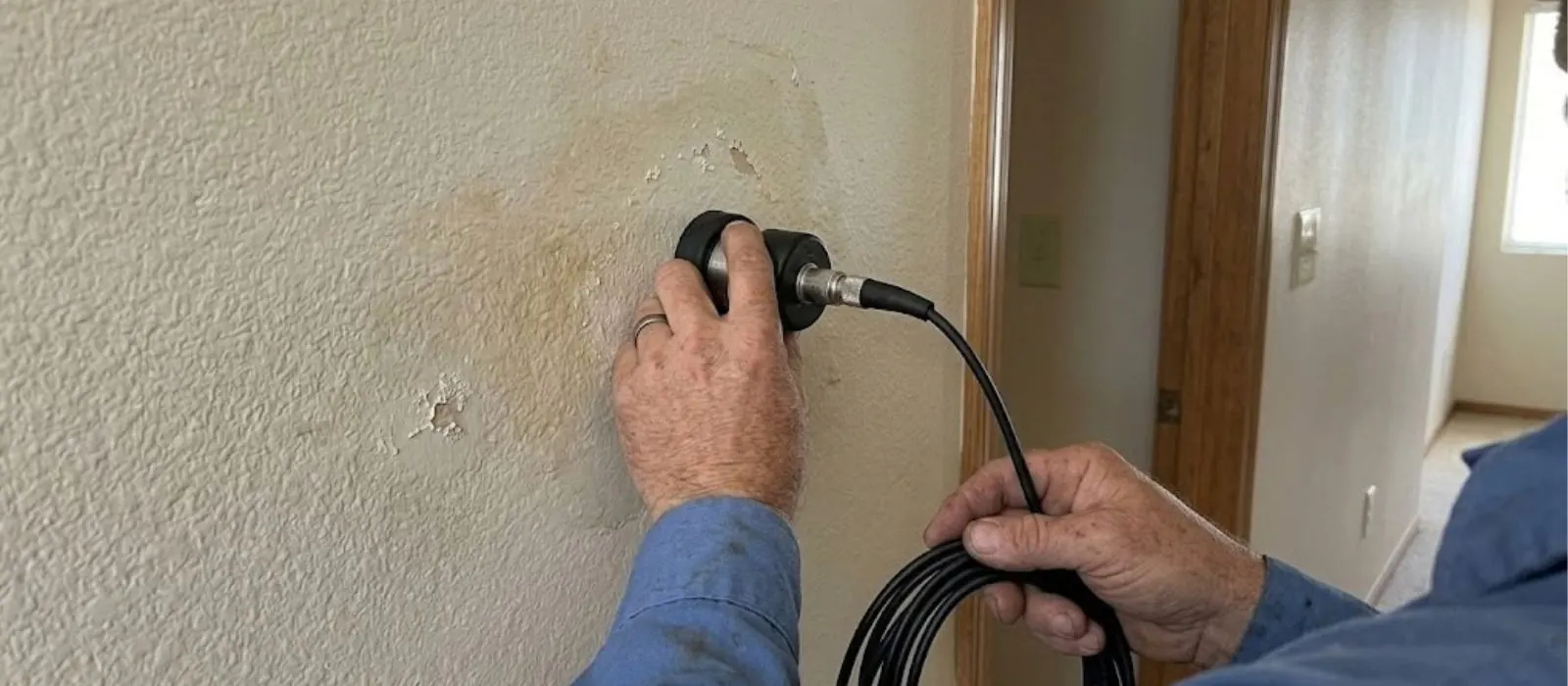
Plumbers find hidden leaks by process of elimination: a meter test confirms water is leaking, a pressure test narrows the section, and acoustic, thermal or tracer-gas tools pinpoint the spot. Done well, it means one small access hole in the right place instead of several in the wrong ones.
Step one: prove there is a leak
Turn off every fixture and appliance that uses water, then look at the water meter. Most meters have a small flow indicator, often a triangle or a dial, that moves when any water passes. If it moves with everything off, water is leaving the house.
A second test is the bill. A jump of a third or more with no change in how you live is worth checking. Toilets that run, a dripping faucet and a hose bib that leaks outdoors are common causes that are easy to find before you call anyone.
Step two: inside or outside
Close the main valve inside the house and check the meter again. If it stops, the leak is inside the house. If it keeps moving, the leak is on the line between the meter and the valve or on the utility side.
A buried service line leak is a different repair from an interior leak. See water service line repair for how the line is located and fixed. The utility owns part of the line, and the owner owns the rest.
The tools plumbers use
| Tool | What it finds | Best for |
|---|---|---|
| Pressure test | Whether a section of pipe holds pressure | Isolating supply lines |
| Acoustic listening device | The sound of water escaping from pipe | Slab, wall and buried leaks |
| Thermal camera | Temperature differences from wet or hot-water leaks | Walls, ceilings, floors |
| Moisture meter | Dampness inside materials | Confirming a wet area |
| Tracer gas | Gas escaping from a pressurized pipe | Hard-to-find leaks |
| Sewer camera | Leaks in drain lines | Waste and drain pipes |
No single tool is perfect. A thermal camera cannot see through everything, and listening devices pick up noise from other sources. Using two methods together raises confidence before anyone cuts a wall.
Slab leaks, wall leaks and radiant heat
- Slab leaks may show as a warm spot on the floor, the sound of running water or a high bill
- Wall leaks show as stains, peeling paint, mold smell or a soft spot
- Radiant heating loops can leak into a slab and look like a domestic leak
- Ceilings under bathrooms often stain from supply and drain leaks above
- Crawlspace leaks show as wet insulation and a musty smell
Slab leaks are less common in New England basement houses, but they appear in additions, garages and some condos. A radiant heat leak is not a domestic leak, and a plumber identifies which system is losing water.
After the leak is found
The repair is the next step. It may be a small section of pipe, a valve, a fitting or, when the pipe is failing everywhere, a conversation about repiping. Dry out wet materials within a day or two to prevent mold, and document the location for your insurer.
Many policies cover damage from a sudden leak but not the cost of finding or fixing the pipe, and some cover the cost of access when damage follows. Ask your agent what yours covers before you file.
What to do while you wait for a plumber
- Close the main water valve if water is visible.
- Switch off power to wet areas only if you can reach the panel dry.
- Move belongings out of the wet area.
- Take photos and a short video of the damage.
- Note when the leak started and what you saw first.
How to read your own water bill
Your water bill is a leak detector that arrives on a schedule. Compare the latest bill with the same period last year, not with last month, since usage changes with the season and with guests. A jump that stays high for two billing periods in a row points to a continuing leak, while one high bill followed by a normal one is more likely a refill, a hose or a filled pool.
Write down the meter reading before bed and again in the morning if nobody used water overnight. The difference is your overnight leak rate. A few gallons can be a toilet flapper, while a steady flow means a bigger problem and a faster response.
Small leaks that add up
- A toilet that refills by itself every few minutes
- An irrigation valve that sticks open
- A water softener or filter that never stops draining
- A drip from a hose bib inside a wall
- A water heater relief valve that weeps
Fix the small ones first. They are cheaper to repair, and ruling them out makes the plumber's search for a hidden leak faster and more accurate.
Frequently asked questions
A pressure test narrows the section, then acoustic listening, thermal imaging or tracer gas pinpoints the spot.
Turn off all water, then see if the leak indicator or dial moves. If it does, water is escaping.
Generally the utility owns the line to the meter and the homeowner owns the rest. Ask your utility where the boundary is.
Some policies cover access and detection when damage follows. Many cover water damage but not the pipe itself.
The town's water page reports about 49 gallons per capita per day for residential use from 2016 to 2020.