
Most Glacier Bay bathroom faucet problems come down to a worn cartridge, a clogged aerator or a loose handle, and each takes under an hour to fix with a few hand tools. Close the shutoff valves under the sink, identify whether your faucet has one handle or two, and replace the part that matches the symptom.
Find your faucet type
Glacier Bay is a house brand sold through big-box stores, and its bathroom faucets come in single-handle, two-handle and widespread styles. The type decides the repair. Single-handle faucets use one cartridge, while two-handle faucets use two cartridges or valve stems.
Look under the sink and on the faucet body for a model number. If you cannot find it, take the old cartridge to the store, or photograph it. Cartridges look similar but are not interchangeable.
Symptoms and fixes
| Symptom | Likely cause | Fix |
|---|---|---|
| Drip from the spout | Worn cartridge or seat | Replace the cartridge |
| Leak at the handle base | Worn O-ring | Replace O-rings |
| Weak flow | Clogged aerator | Clean or replace the aerator |
| Handle loose or wobbly | Loose set screw | Tighten the screw |
| Hot and cold are reversed | Cartridge installed wrong | Rotate or reinstall |
| Water under the sink | Supply line or shutoff leak | Replace the line or valve |
Replacing a cartridge
- 1
Shut off the water
Close the hot and cold shutoff valves under the sink and open the faucet to drain it.
- 2
Remove the handle
Pop off the cap, loosen the set screw with a hex key and lift off the handle.
- 3
Remove the cartridge
Take out the retaining clip or nut and pull the cartridge straight up.
- 4
Install the new cartridge
Align the tabs, set it in, replace the clip and reassemble.
Put the plug in the sink before you start so no small screws fall down the drain. Take a photo at each step. If a cartridge is stuck, use a puller instead of pliers, which can crack the faucet body.
Cleaning the aerator
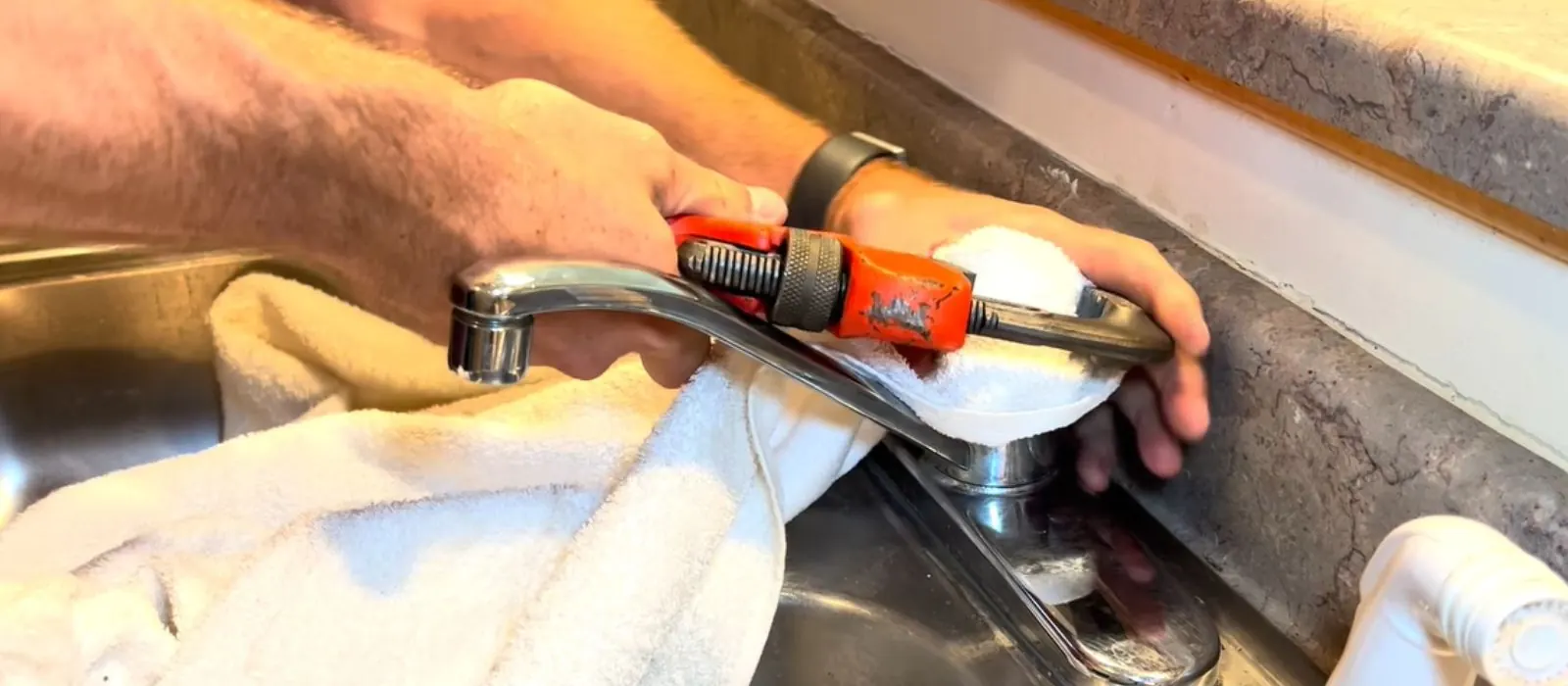
The aerator is the screen at the tip of the spout. Unscrew it with a cloth around it to avoid scratching the finish, rinse out the grit and soak it in vinegar if it is crusty. Reassemble it and test the flow. This one step fixes more low-flow complaints than any other.
When it is not the faucet
A drip under the sink is not always from the faucet. The supply lines and the shutoff valves leak as they age. A valve that will not close completely, or leaks when you turn it, should be replaced by a plumber. See faucet repair for how we handle stuck valves.
A slow drain is a separate problem from a faucet. A pop-up stopper with hair on it or a clogged trap can slow a sink, and our drain cleaning page explains the options. If water is escaping with no obvious source, a leak detection visit finds it.
Repair or replace the faucet
- Repair if the finish is good and parts are available
- Replace if the body is cracked or corroded
- Replace if repeated repairs fail in a short time
- Replace if you want a new style or water-saving model
- Replace the supply lines at the same time as the faucet
Tools and parts to gather first
Most of this repair needs only a few tools. Having them within reach before you shut off the water keeps the sink out of service for less time.
- A small hex key set, since many handles use a set screw
- A flat screwdriver for popping off the decorative cap
- An adjustable wrench and a pair of channel-lock pliers
- A towel to protect the sink finish and block the drain
- Replacement cartridge, O-rings and plumber's grease
- A flashlight, because the shutoff valves sit in a dark cabinet
Common mistakes
People often buy a cartridge by guessing the brand. Take the old cartridge with you and compare the stem, the notches and the length before you pay. Another mistake is skipping the grease. A light coat on the O-rings keeps the handle smooth and helps the new part last longer.
Finally, turn the water back on slowly and open the faucet first so air can escape. A sudden surge can blow debris into the new cartridge.
When a repair is not worth it
A faucet with a cracked body, a pitted spout or a finish that is flaking is past repair. Buying a new cartridge for a faucet in that condition only delays the replacement. Compare the price of the parts and your time with a new faucet, and remember that a new one comes with a fresh warranty and new supply lines.
Frequently asked questions
Look for a model number under the sink or on the box. If you cannot find one, bring the old cartridge or a photo to the store.
A worn cartridge or seat is the usual cause. Replace the cartridge.
The state treats fixing a leaky faucet as a minor repair. Replacing valves or other working parts is not minor, so ask the building department.
Yes. Do not force it. A plumber replaces the valve.
Soak it in vinegar and rinse it. Hingham's water quality report does not list hardness, so test your tap if crust returns quickly.